

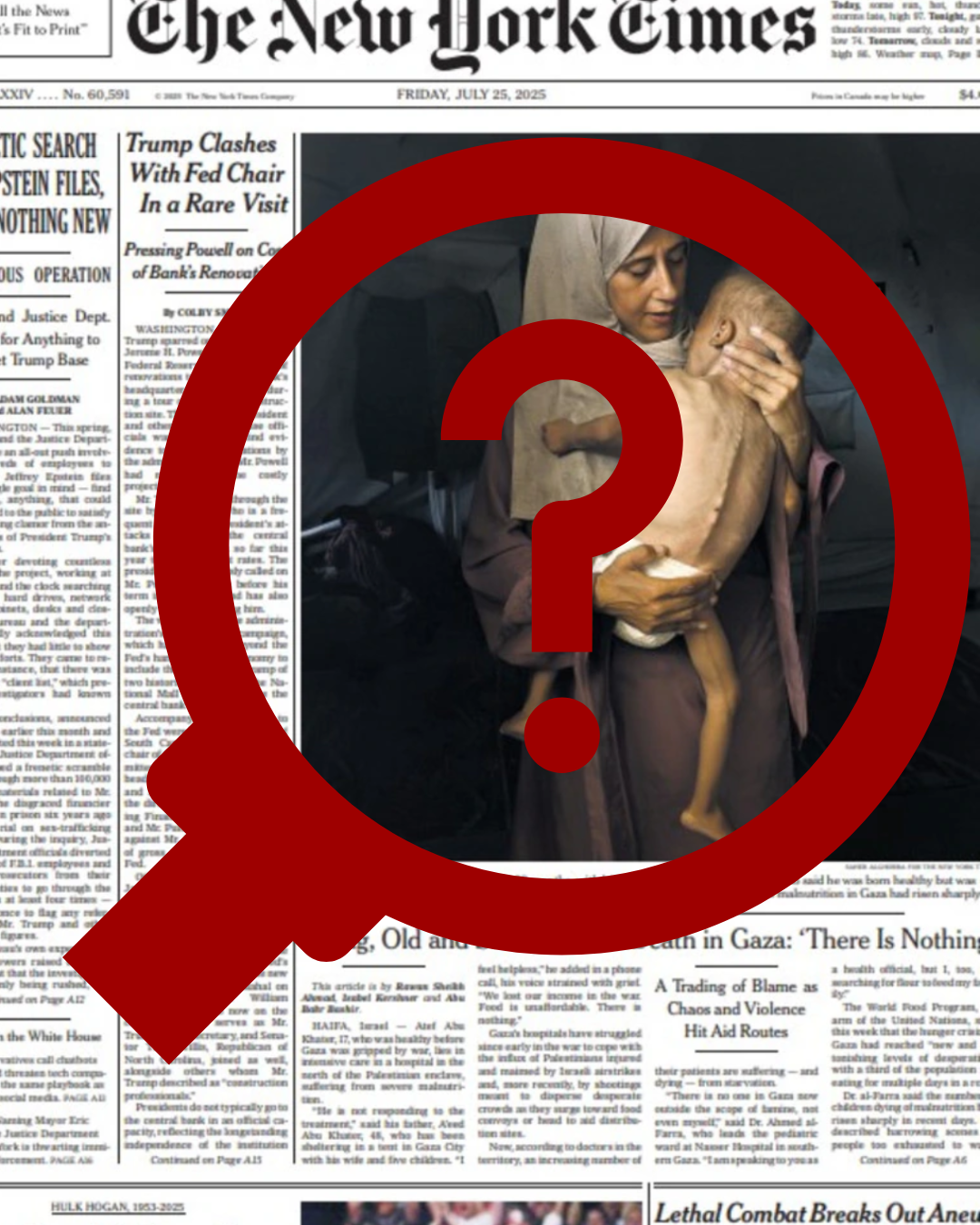
A widely circulated image of a young boy, published on the front pages of several newspapers and described as a starving child in Gaza, has been revealed to be misleading.
The photo shows Hidaya Yassin al-Mutawaq holding the skeletal body of her 18-month-old son, inside their tent, west of Gaza City.
The photo, which has sparked international outrage, is now being labelled as ‘fake news’ by officials who say it was used to undermine Israel’s humanitarian aid efforts in the region, as the war with Hamas continues.
A journalist has revealed the child is suffering from a rare genetic disorder, not starvation, as initially reported.
Freelance investigative journalist David Collier noticed the boy’s mother and brother looked healthy and looked into the details further.

Collier said media outlets were “deliberately pushing a deceptive narrative that only serves to benefit Hamas and create fake news.”
He said the boy “has needed specialist media supplements since birth.”
The New York Times admitted an error in publishing the image after it emerged the boy had been diagnosed with pre-existing health conditions. The photo was run on the newspaper’s front page with the headline, “Young, old and sick starve to death in Gaza.”


“We have since learned new information, including from the hospital that treated him and his medical records, and have updated our story to add context about his pre-existing health problems,” the New York Times said in a statement.
It was also published by the Sydney Morning Herald, The Age, BBC, CNN, The Times and Sky.


Israel has denied using hunger as a weapon of war and announced a pause on military operations in densely populated areas to allow more humanitarian aid in.
Israel’s Defence Force said there is no starvation in Gaza and that the claims are part of a false Hamas propaganda campaign.
Since the 19th May this year, more than 93,000 tons of aid has been brought through land crossings on almost 4,500 trucks. That doesn’t include the distribution centre operated by the GHF, which delivered 90 million meals.
