

Intelligence is an energetically expensive luxury – as the rise of artificial intelligence has reminded us. The human brain is no exception.
Comprising roughly 2% of the body weight, it uses one fifth the body’s energy in the resting state – compared with less than half of this in non-human primates. A five-year-old child devotes 66% of the energy they need to stay alive to their brain.
How did our ancestors foot the energy bill to run their uniquely large brains? Eating more meat is often considered to be the answer. But there’s a catch. The brain relies on a form of fuel that is not present in meat: glucose.
Our new study, published today in Science, shows that carbohydrates contributed more than half our total energy requirements over four million years of evolution. It holds important clues for why we crave sweet foods today – and how we can eat more healthily.
The matter of meat
Many anthropologists have credited meat eating as the stimulus to produce a large brain. After all, it required tools to butcher the carcass and access the fat-rich marrow inside bones.
Protein and fat in fruit and leaves are dilute, requiring hours of chewing, while animal foods are dense sources that can be devoured quickly. Bone marrow is a rich source of essential fats.
In truth, humans do not require more protein as a proportion of energy than other primates.
Our increasingly large brains and high reproductive rate demanded carbohydrate calories (found in plants but not meat), while our taller and heavier bodies needed fat calories to move those big muscles.
Although the body can synthesise glucose from precursors such as amino acids, the process is finite and energetically inefficient. Furthermore, there are limits on using just protein as fuel. For example, it can lead to a type of poisoning known as “rabbit starvation”.
A minimum amount of dietary carbohydrate was necessary. Our new study shows that, for much of evolution, the sugars in fruit and honey were the source.
Modelling ancient diets
We modelled the diets of hominins – the group consisting of humans and our immediate ancestors – over four million years of evolution.
First, we calculated overall demand for glucose by the organs and tissues which use it as their primary source of energy. Apart from the brain, red blood cells and the kidneys require glucose.
We then accounted for reproductive needs. The fetus and placenta use glucose not just as an energy source but as a structural component of growing tissues. Synthesis of DNA, RNA and nerve cell membranes requires glucose. During lactation, women use about 80g of glucose each day to produce the sugars in human milk.
Then we modelled the availability of macronutrients – carbohydrates, fats and proteins – from foods, starting with the diminutive ancient ape known as Lucy (Australopithecus afarensis).
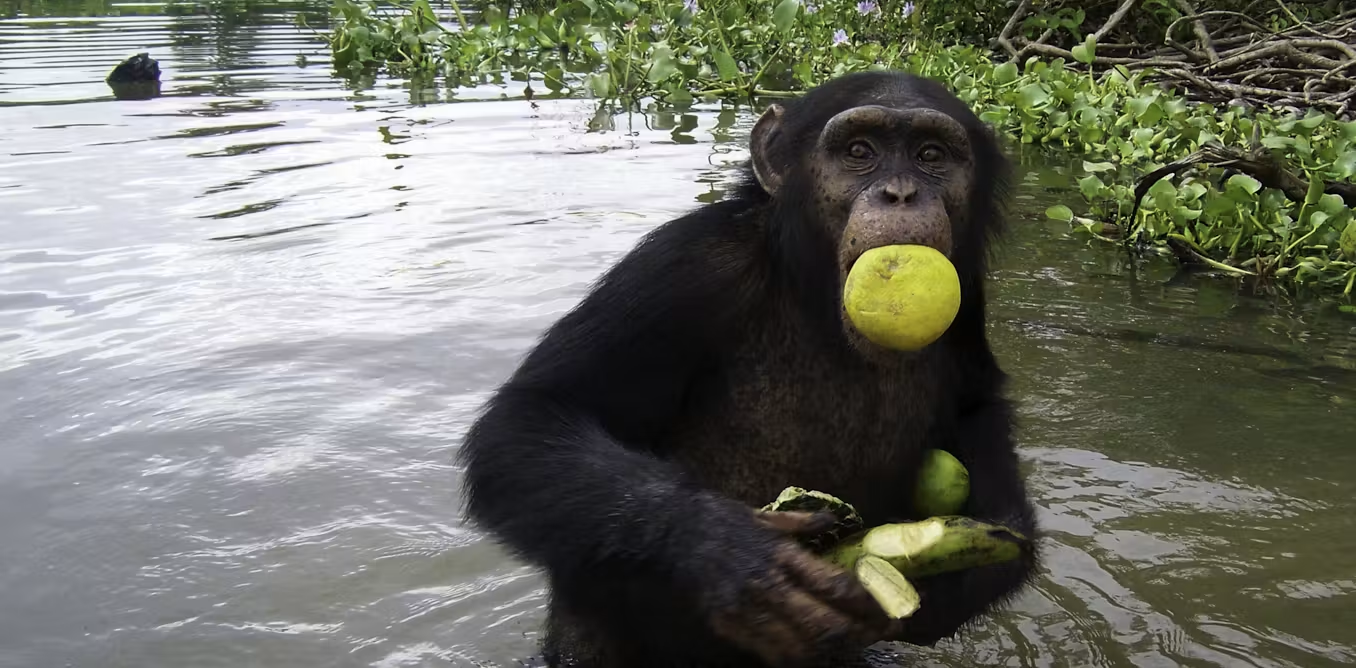
This early ancestor of ours walked on two legs, and was likely to be a ripe fruit specialist like chimpanzees today. Over two thirds of her energy came from naturally-occurring sugars.
Indeed, some scientists think frugivory – a feeding strategy primarily characterised by eating fruit – kick-started the evolution of large brains because, living in tropical forests, our ancestors required good cognition to remember when and where the best fruits were ripening. They needed strategic thinking to beat the birds and other competitors.
We finished up with the known diet composition of contemporary human foragers in warm climates. In six incremental steps, we incorporated increasing proportions of animal-based food, starting with 5% of calories and finishing with 35–50%.
Around one million years ago, mastery of fire allowed cooked starch, which unlike raw starch can be easily digested to provide glucose, to replace some of the sugars. Relatively recently, about 100,000 years ago, grinding stones and hearths indicate that the starch inside cereal grains became more accessible.
Lessons for modern diets
Did early hominins consume sufficient carbohydrate to cover the obligatory demands of the brain and other tissues? Yes, if you were a male, but only just if you were a pregnant female.
As we ventured out of tropical environments into cold and arid territory, the intake of carbohydrates would have become limiting. Plants would be plentiful, along with protein and marrow fat, but fruit and honey would be seasonal.
We speculate that limited amounts of dietary carbohydrate selected for genes that result in higher blood glucose levels. This would improve the growth and future survival of the fetus.
Today, the same genes likely predispose us to type two diabetes and cardiovascular disease. Low carbohydrate diets may therefore be helpful in specific clinical contexts.
But our findings provide an evolutionary explanation why healthy humans require about half their energy as carbohydrates. They also give us insight into why humans crave sweetness – a pleasurable signal on the tongue that encouraged foods that fuelled the mind and body millions of years ago.
Intrinsically, sugars are highly reactive molecules that are bundled in nature with antioxidants and other natural compounds that reduce harm within the cell.
Ideally, we consume them in that form – as fruit – rather than refined sugars.

David Raubenheimer receives funding from Australian Research Council and receives royalties from specialist and popular science books
Jennie Brand-Miller and Les Copeland do not work for, consult, own shares in or receive funding from any company or organisation that would benefit from this article, and have disclosed no relevant affiliations beyond their academic appointment.
Click here to view the original article.
Author/s: Jennie Brand-Miller, Emeritus Professor of Human Nutrition, University of Sydney
